

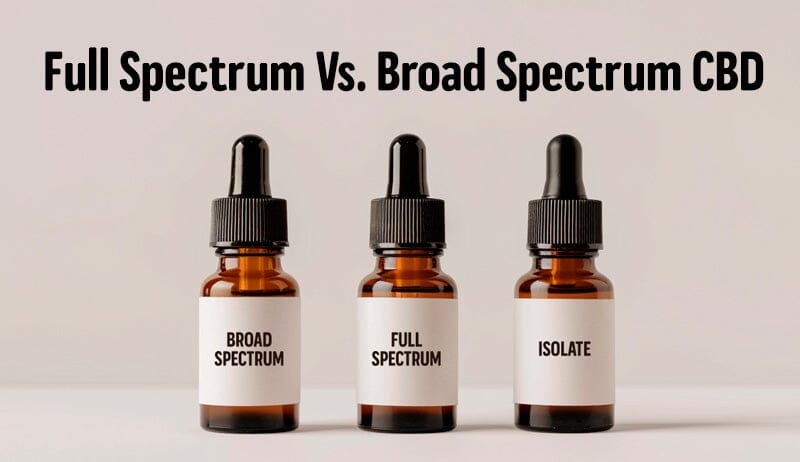
CBD products have become increasingly popular among consumers seeking natural wellness solutions. However, when shopping for CBD oil, one of the most common questions people ask is: What is the difference between Full-Spectrum CBD, Broad-Spectrum CBD, and CBD Isolate?
Understanding these three types of CBD extracts is essential for choosing the product that best fits your needs. While all contain cannabidiol (CBD), they differ significantly in their cannabinoid content, THC levels, and potential benefits.
In this guide, we’ll explain the differences between Full-Spectrum CBD, Broad-Spectrum CBD, and CBD Isolate, along with their advantages and considerations.
What Is CBD?
CBD, or cannabidiol, is a naturally occurring compound found in the hemp plant. Unlike THC (tetrahydrocannabinol), CBD is non-intoxicating and does not produce a “high.”
CBD products are commonly used as part of wellness routines and are available in various forms, including oils, tinctures, capsules, gummies, topical creams, and pet products.
The primary difference between CBD products lies in how the CBD extract is processed.
What Is Full-Spectrum CBD?
Full-Spectrum CBD contains all naturally occurring compounds found in the hemp plant, including:
- CBD (Cannabidiol)
- Minor cannabinoids
- Terpenes
- Flavonoids
- Trace amounts of THC (within legal limits)
Because Full-Spectrum CBD contains a wide range of hemp compounds, many users prefer it for its potential to provide what is commonly known as the “entourage effect.”
Benefits of Full-Spectrum CBD
- Contains the complete range of beneficial hemp compounds
- Preserves naturally occurring terpenes and cannabinoids
- May offer enhanced effects due to compound interaction
- Closest representation of the original hemp plant
Considerations
- Contains trace amounts of THC
- May not be suitable for individuals avoiding THC entirely
- Some users may have workplace testing concerns
What Is Broad-Spectrum CBD?
Broad-Spectrum CBD is similar to Full-Spectrum CBD but undergoes additional processing to remove THC.
It typically contains:
- CBD
- Minor cannabinoids
- Terpenes
- Flavonoids
- No detectable THC (depending on manufacturing processes)
Broad-Spectrum CBD aims to provide many of the benefits associated with multiple hemp compounds while eliminating THC exposure.
Benefits of Broad-Spectrum CBD
- THC-free or non-detectable THC
- Retains multiple cannabinoids and terpenes
- May still support some entourage effect benefits
- Suitable for consumers who wish to avoid THC
Considerations
- Processing may remove some naturally occurring compounds
- Product quality depends heavily on manufacturing methods
What Is CBD Isolate?
CBD Isolate is the purest form of CBD available.
During extraction and refinement, all other hemp compounds are removed, leaving behind nearly pure cannabidiol.
CBD Isolate typically contains:
- 99%+ pure CBD
- No THC
- No terpenes
- No additional cannabinoids
It is often available as oils, powders, capsules, and infused products.
Benefits of CBD Isolate
- Contains only CBD
- THC-free
- Flavorless and odorless
- Easy to measure and formulate
- Ideal for users wanting pure cannabidiol
Considerations
- Does not contain terpenes or minor cannabinoids
- Does not provide the entourage effect associated with broader hemp extracts
Understanding the Entourage Effect
One of the most discussed concepts in the CBD industry is the entourage effect.
The entourage effect refers to the theory that cannabinoids, terpenes, and other hemp compounds may work together synergistically when consumed as a complete extract.
This is one reason many consumers choose Full-Spectrum or Broad-Spectrum CBD over CBD Isolate.
While research into the entourage effect continues, it remains an important consideration when selecting a CBD product.
Full-Spectrum vs Broad-Spectrum vs CBD Isolate: Quick Comparison
Full-Spectrum CBD
- Contains CBD: Yes
- Contains Minor Cannabinoids: Yes
- Contains Terpenes: Yes
- Contains THC: Trace amounts
- Entourage Effect: Highest potential
Broad-Spectrum CBD
- Contains CBD: Yes
- Contains Minor Cannabinoids: Yes
- Contains Terpenes: Yes
- Contains THC: No detectable THC
- Entourage Effect: Moderate potential
CBD Isolate
- Contains CBD: Yes
- Contains Minor Cannabinoids: No
- Contains Terpenes: No
- Contains THC: None
- Entourage Effect: Not applicable
Which Type of CBD Is Best?
The best CBD type depends on your individual preferences and wellness goals.
Choose Full-Spectrum CBD If:
- You want the most complete hemp extract.
- You are comfortable with trace amounts of THC.
- You are interested in the potential entourage effect.
Choose Broad-Spectrum CBD If:
- You want multiple hemp compounds without THC.
- You prefer a THC-free option.
- You still want cannabinoids and terpenes.
Choose CBD Isolate If:
- You want pure CBD only.
- You prefer a product with no THC or additional cannabinoids.
- You are new to CBD and want a straightforward option.
How to Choose a Quality CBD Product
Regardless of which type you select, consider the following factors when shopping for CBD:
Third-Party Lab Testing
Always look for products that provide independent laboratory test results.
Hemp Source
Choose CBD made from high-quality hemp grown under strict agricultural standards.
Ingredient Transparency
Review ingredient lists and product labels carefully.
Brand Reputation
Purchase from reputable CBD companies with positive customer feedback and transparent manufacturing practices.
Final Thoughts
When comparing Full-Spectrum CBD, Broad-Spectrum CBD, and CBD Isolate, there is no single option that is best for everyone.
Full-Spectrum CBD offers the widest range of hemp compounds, Broad-Spectrum CBD provides a THC-free alternative while retaining many beneficial components, and CBD Isolate delivers pure cannabidiol without additional cannabinoids or terpenes.
Understanding these differences can help you make an informed decision and choose a CBD product that aligns with your preferences and wellness goals.
Whether you’re new to CBD or an experienced user, selecting a high-quality product from a trusted brand is the most important step toward a positive CBD experience.